MrMakeIt
A Ship of Theseus in 3D Printing
The Origin Story
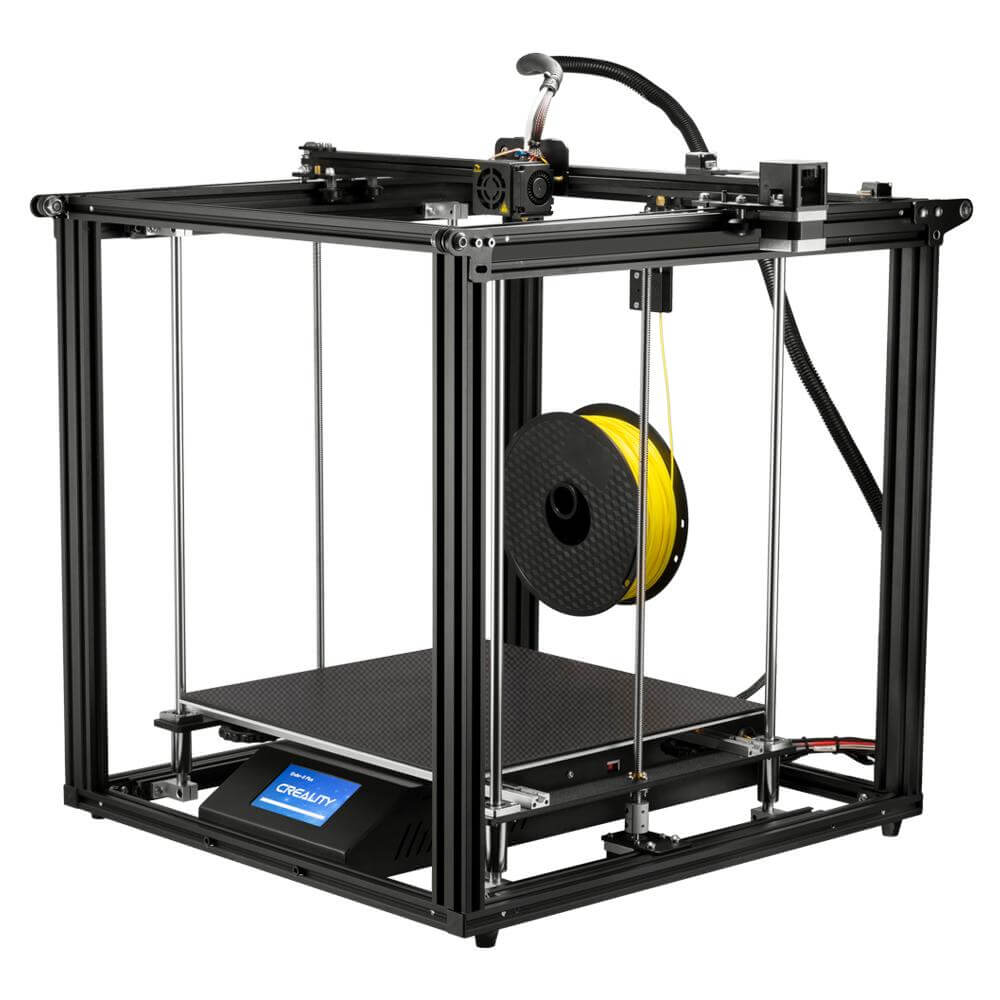
MrMakeIt began life as a humble Creality Ender 5 Plus, a popular entry-level 3D printer chosen for its generous 350x350x400mm build volume. But like the ancient philosophical paradox of the Ship of Theseus, where a ship is replaced plank by plank until none of the original timber remains, MrMakeIt has been transformed into something entirely different.
Today, the only original components remaining are the power entry module and the power supply (and perhaps a few stray screws). Everything else has been re-engineered to chase a singular goal: industrial performance in a home workshop.
The Evolution
Phase 1: The Iterative Beginning
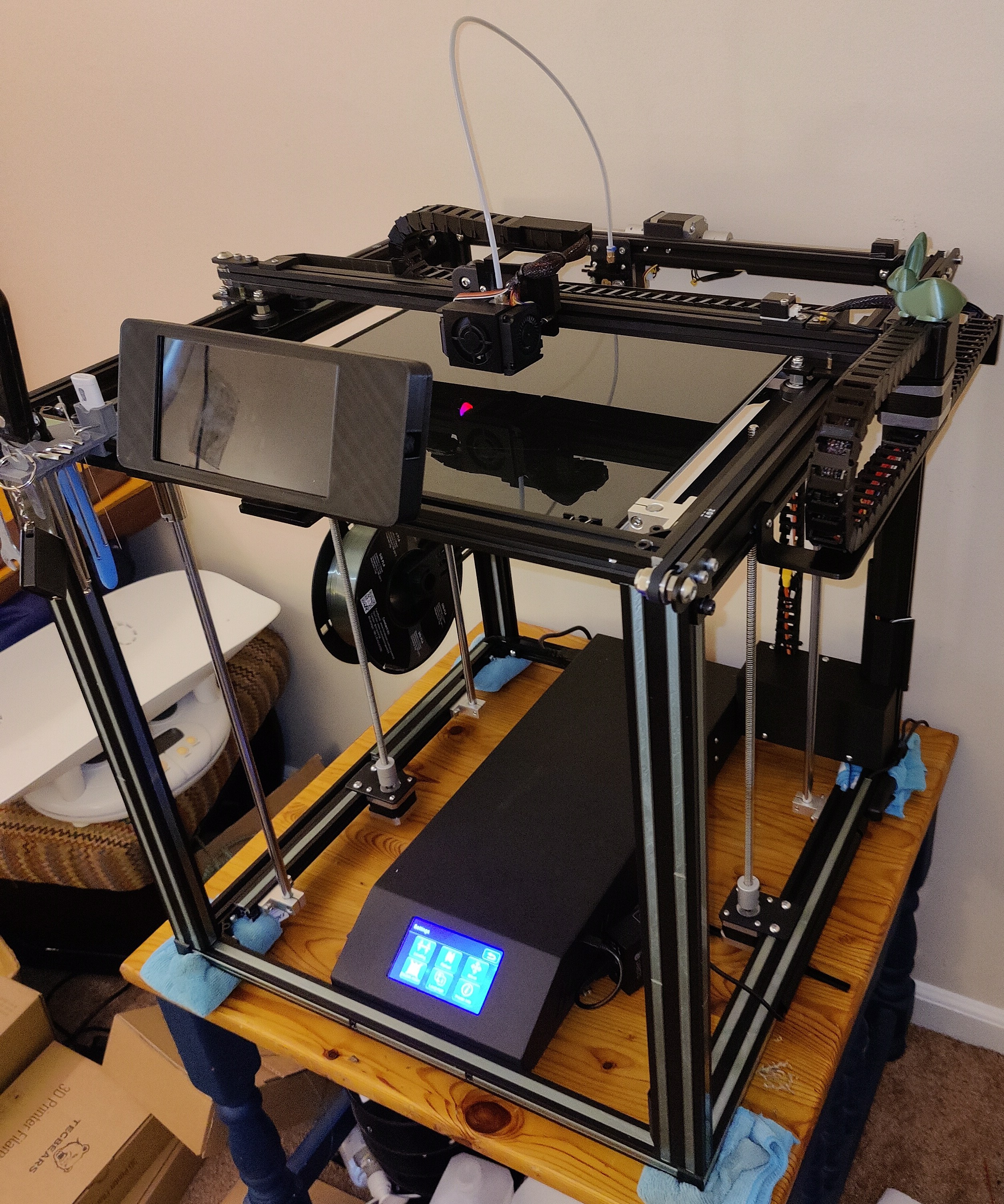
Like many enthusiasts, the journey began with small tweaks. The stock Ender 5 Plus used "V-rollers" (rubber wheels riding on aluminum extrusions) for motion. Over time, these wheels wear down, developing flat spots that introduce artifacts into prints. The initial phase involved stabilizing this motion system, but eventually, the limitations of moving heavy masses on rubber wheels necessitated a total redesign.
Phase 2: The Motion System (Mercury One)
The most transformative upgrade was the conversion to the ZeroG Mercury One CoreXY system. In a standard printer, one motor moves X and another moves Y. In CoreXY kinematics, two stationary motors work in unison to move the toolhead. This significantly reduces moving mass and allows for much higher acceleration. By converting to this system and replacing the V-rollers with precision MGN12H linear rails, the printer gained the mechanical rigidity required for high-speed printing.
Phase 3: The Hydra Bed System
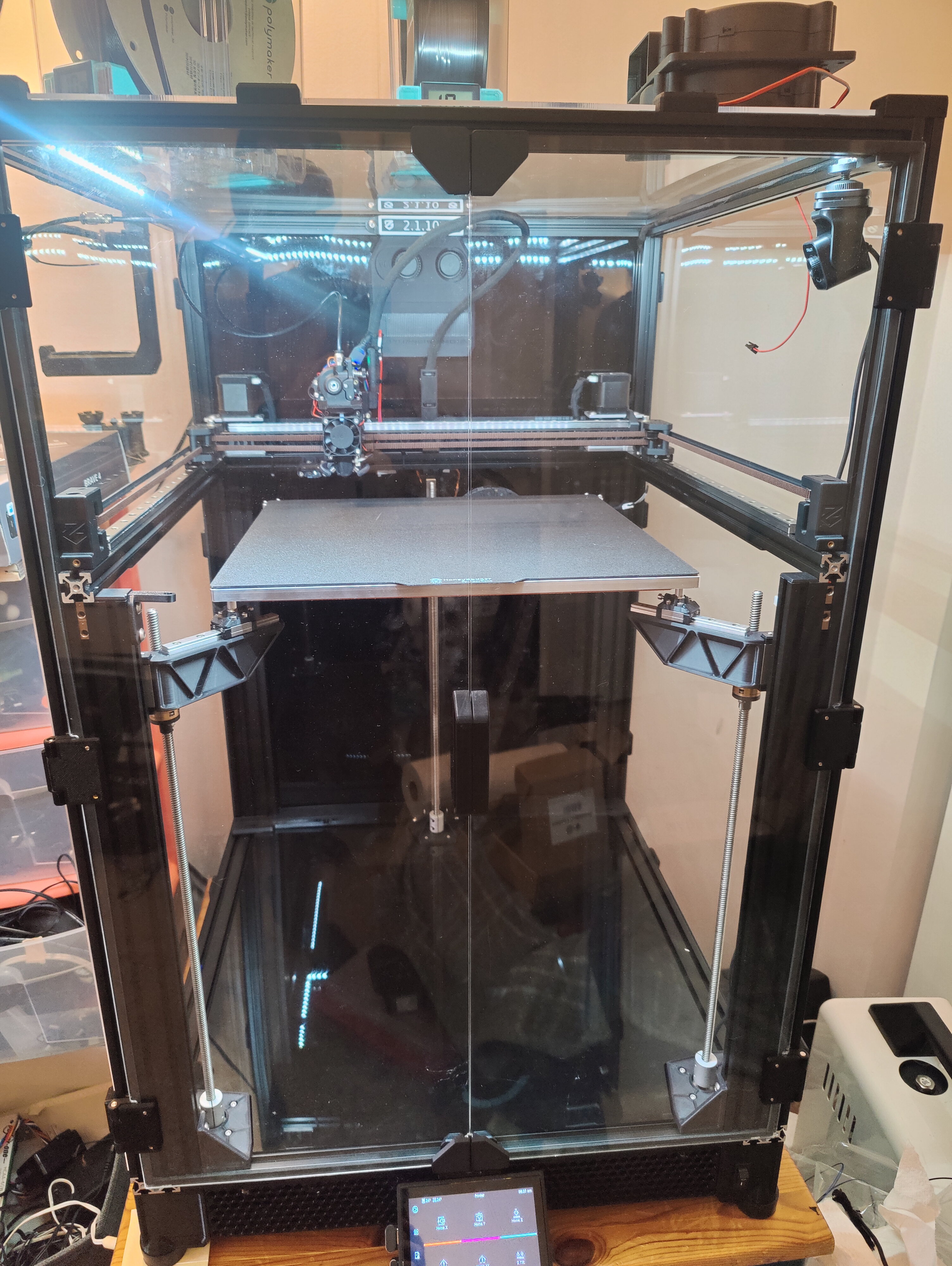
Large aluminum beds suffer from a specific physics problem: when heated, they expand. If the bed is bolted down at four corners (like the stock printer), this expansion has nowhere to go, forcing the plate to bow upwards into a "taco" shape. The ZeroG Hydra system solves this by mounting the bed on three independent Z-axis motors using kinematic mounts. This allows the bed to expand radially without warping, ensuring a perfectly flat surface regardless of temperature.
Phase 4: The Enclosure (The Tipping Point)
To print engineering materials like ABS and ASA, the print environment must be controlled. I reconstructed the entire frame with new extrusions to square the machine and added a full enclosure. This upgrade included a Nevermore activated carbon filtration system, which recirculates chamber air to scrub Volatile Organic Compounds (VOCs) rather than just venting them.
Deep Dive: System Architecture
MrMakeIt is not just a collection of hardware; it is a tightly integrated system where firmware, electronics, and thermodynamics are managed with granular control.
Thermal Equilibrium Strategy
Heating a large, 8mm thick Mic6 aluminum plate introduces significant thermal lag; the heater pad may read 100°C while the print surface is only 85°C. To solve this, MrMakeIt utilizes a Temperature Combined Sensor algorithm.
- Dual Sensing: The firmware averages readings from the silicone heater pad and a secondary thermistor bolted directly to the aluminum plate.
- Equilibrium Logic: The
START_PRINTmacro prevents operation until the external sensor specifically reaches the target window. This guarantees the entire thermal mass is heat-soaked before the first layer begins, eliminating warping caused by thermal expansion during the print.
Closed-Loop Electronics Cooling
Driving the heavy gantry requires running the TMC2209 stepper drivers at a high 1.4A RMS current. To prevent driver overheating, which causes layer shifts, I implemented an active PID cooling loop.
- PID Control: A dedicated fan monitors the temperature of the stepper drivers and adjusts speed dynamically to maintain a target of 45°C.
- Efficiency: Unlike static fans that run at 100% noise levels, this system only applies as much cooling as necessary, keeping the machine whisper-quiet during low-load operation and ramping up solely during high-speed moves.
Next-Generation Topography Mapping
A flat first layer is critical. MrMakeIt employs z_tilt_ng (Next Generation), an advanced leveling algorithm available in the Kalico firmware fork.
- 0.003mm Tolerance: The probe repeatedly measures three points on the bed, adjusting the three independent Z-motors until they are aligned within 3 microns of each other.
- High-Density Mesh: Once leveled, the machine generates a 21x21 point topological map (441 total measurement points) to compensate for even the slightest surface deviations across the 350mm build plate.
Advanced Firmware Features (Kalico)
The printer runs Kalico (formerly DangerKlipper), a bleeding-edge fork of Klipper that enables experimental kinematic models.
- Tanh Pressure Advance: Instead of standard linear pressure advance, MrMakeIt uses a hyperbolic tangent (tanh) model to predict filament flow behavior during acceleration, resulting in sharper corners at high speeds.
- Object Exclusion: The firmware can dynamically cancel specific objects within a failed batch without stopping the entire print.
- Smart Motion Sensor: A filament motion sensor (detecting 4mm of movement) pauses the print instantly if a clog or tangle occurs, saving long prints that would otherwise fail due to extrusion loss.
The Philosophy
MrMakeIt embodies the spirit of the maker community: the belief that our tools should evolve alongside our skills. What started as an entry-level appliance is now a high-performance engineering platform, capable of tasks the original designers never intended.
If you replace every part of a ship, is it still the same ship? For MrMakeIt, the answer is that the machine isn't defined by its parts, but by the continuity of the project. It is a platform for learning, breaking, fixing, and perfecting. In that sense, MrMakeIt has always been the same printer. It just happens to be made of entirely different atoms than when it started.